How artificial turf is installed
Nine steps. The visible ones take a day. The ones that determine whether you are happy in year ten happen before the turf comes off the roll.
Nine steps. The visible ones take a day. The ones that determine whether you are happy in year ten happen before the turf comes off the roll.
We lay out the exact area, mark utilities, and confirm edges against beds, hardscape and property lines. Getting the shape right here avoids waste and awkward seams later.
Three to four inches of existing sod, roots and topsoil come out and get hauled away. This is the step budget installers skip. Organic material left underneath decomposes and the surface settles unevenly within two seasons.
The subgrade is shaped to move water where it should go — away from the house, toward an outlet. On Lexington clay this often means adding drainage: a French drain, a dry well, or a connection to existing site drainage. Clay does not absorb water at a useful rate, so the base has to carry it.
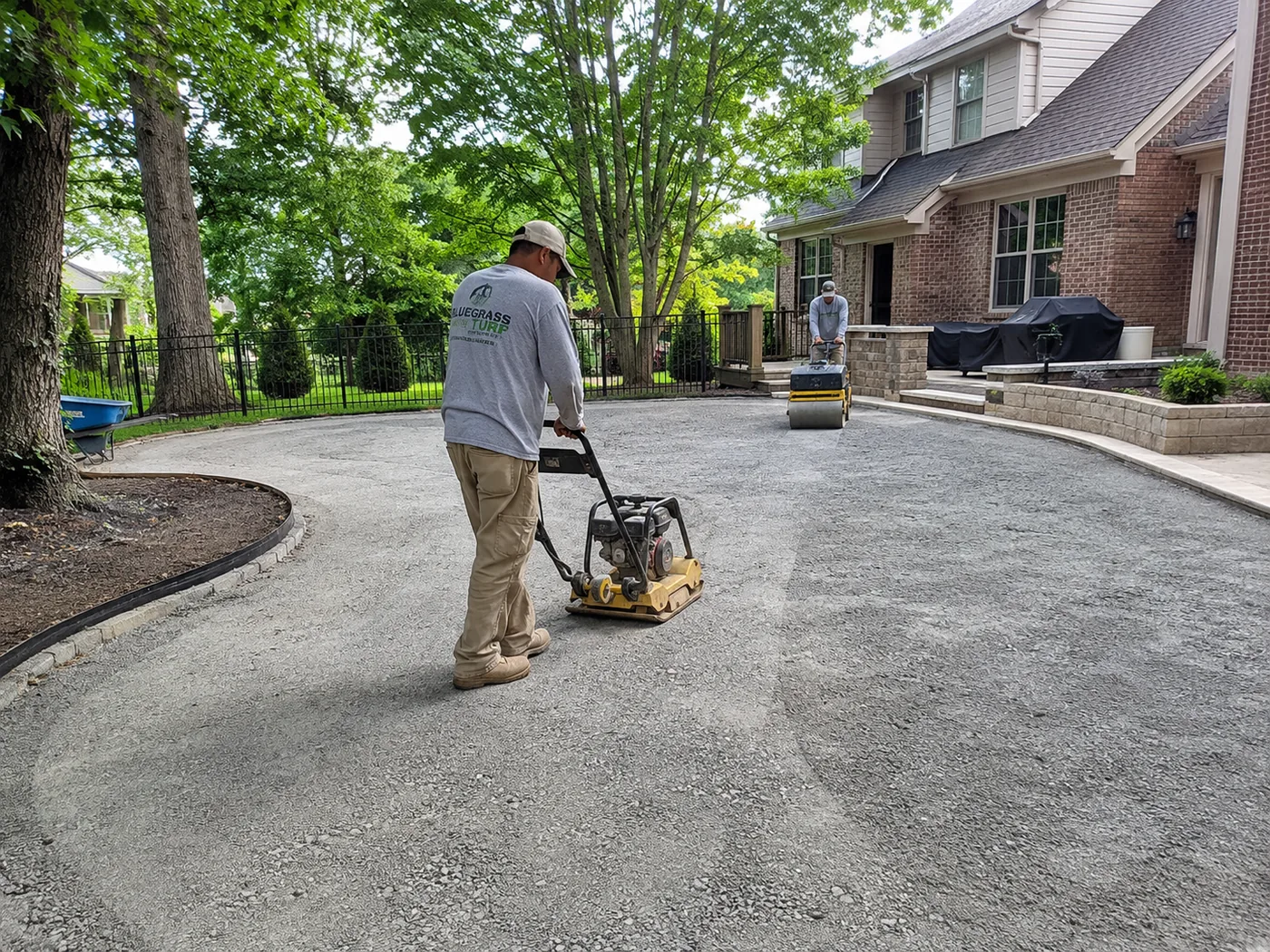
Crushed aggregate goes down in lifts, not one deep layer. Each lift is compacted before the next, typically to a finished depth of three to four inches. This is the structural foundation and it is why a properly built lawn stays flat through freeze-thaw cycling.
Plate compactor across the whole surface, with a final grade check. Target is around 90 percent compaction. Under-compacted base is the single most common cause of ruts and low spots appearing in years two and three.
A permeable fabric between base and turf where the site warrants it. Not always necessary — a properly compacted base is already inhospitable to weeds — but useful in areas with aggressive rhizome grasses.
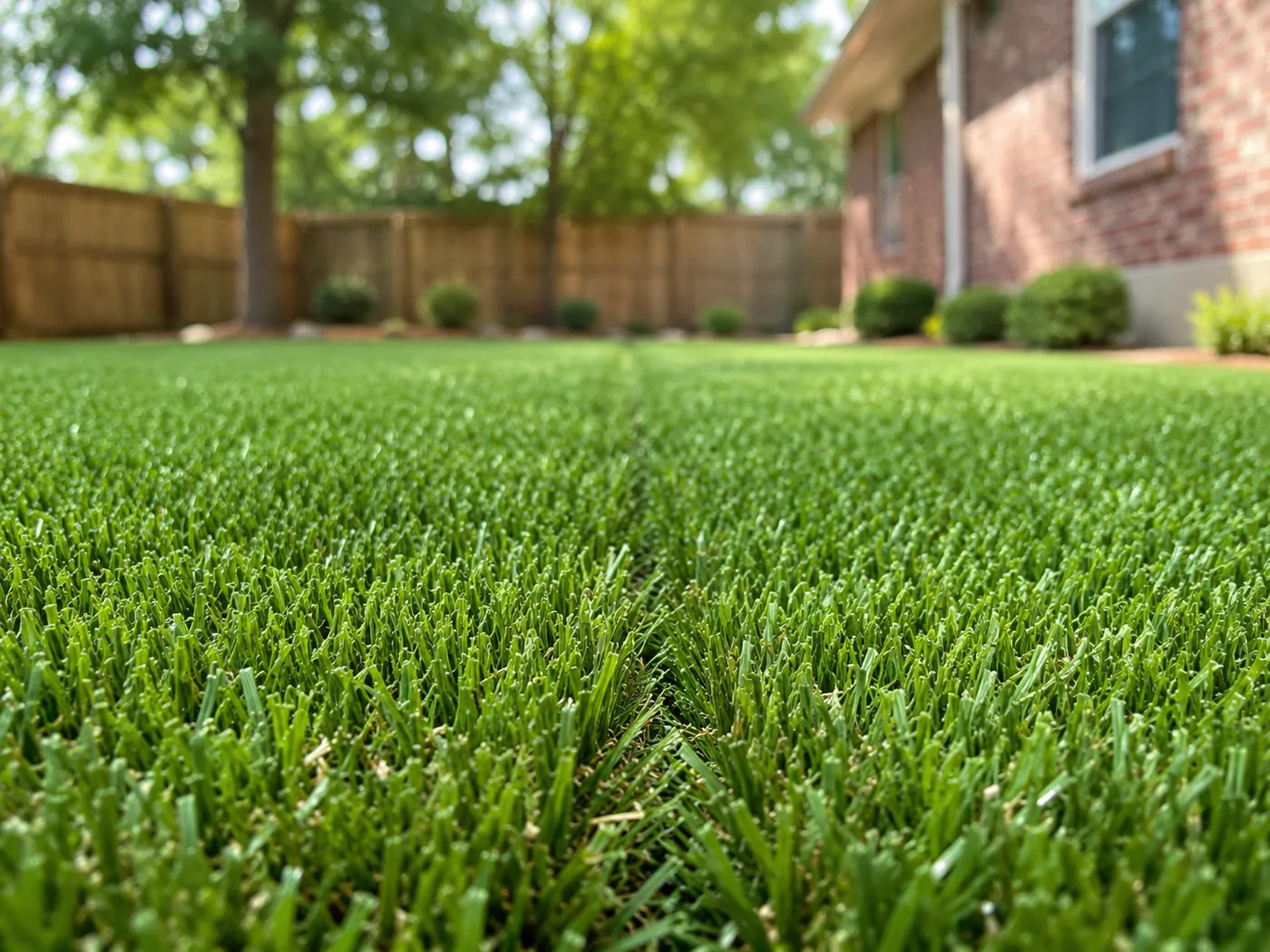
Turf is rolled out and left to relax, ideally in sun, so it loses roll memory before cutting. All panels are laid in the same direction — opposing grain shows as a visible colour difference. Seams are joined with seam tape and adhesive, with blades hand-worked across the join so the line disappears.
Perimeter is secured with nails, staples or bender board depending on the edge condition. Every edge gets fastened. Loose edges are how turf lifts, ripples and gives dogs something to work at.
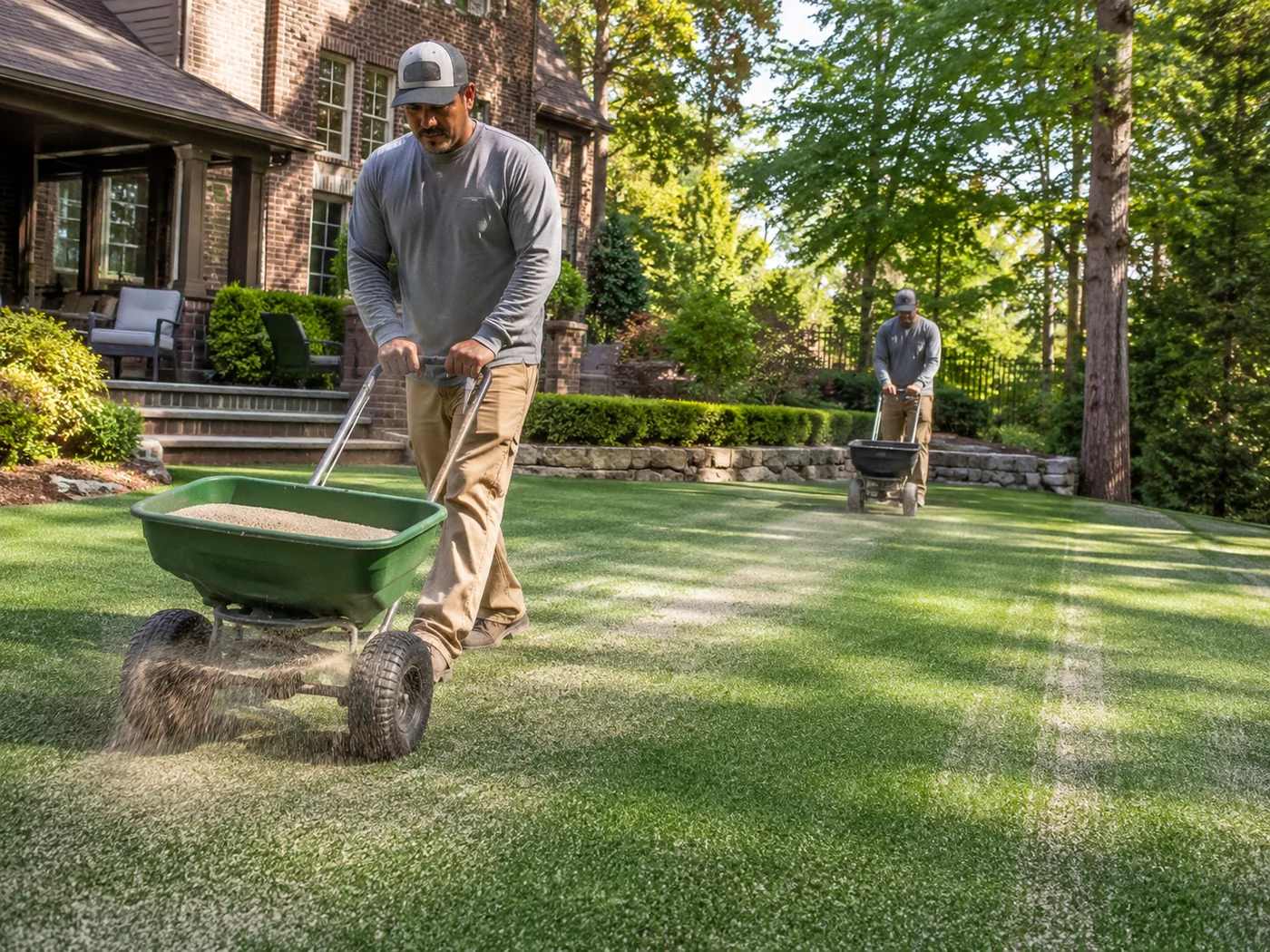
Infill is spread evenly and worked down between the fibres, then the surface is power broomed to stand the blades up. Infill weighs the turf down, protects the fibres from crushing, and gives the surface its natural feel. Under-infilled turf looks flat and wears out early.
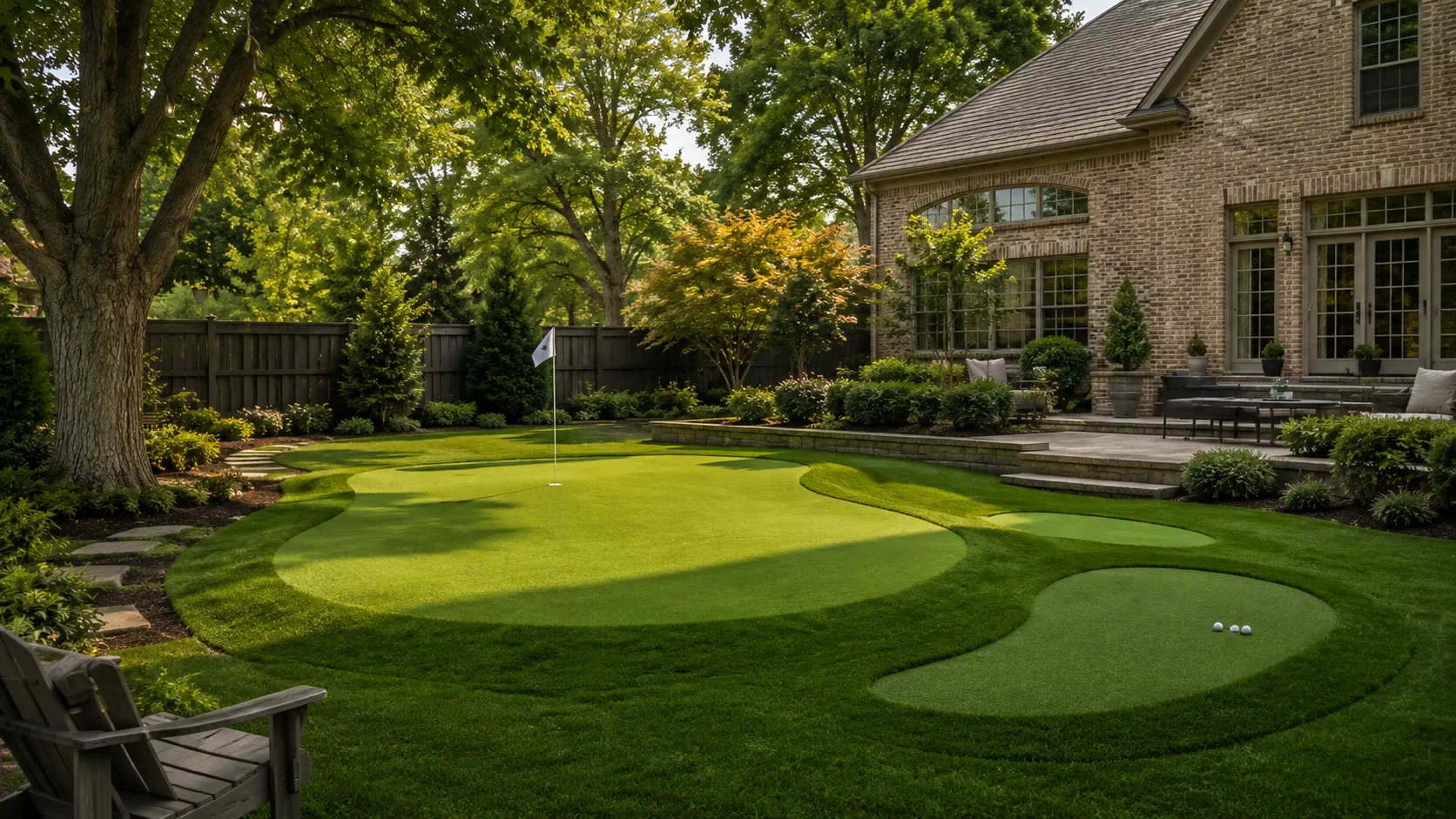
A typical residential lawn is one to two days. Putting greens run two to four because of the laser grading and contouring. Commercial projects are scheduled per site.
If a quote does not mention excavation depth, base depth, or compaction, ask. Those three numbers are the job. A quote that only specifies the turf product is telling you what you can already see and nothing about what you cannot.
Most estimates are scheduled within 48 hours.
Tell us the space and we’ll give you a firm, written price. No pressure, no obligation.