Artificial grass for dogs: the full guide
Everything dog owners ask before installing, answered without the sales gloss.
Everything dog owners ask before installing, answered without the sales gloss.
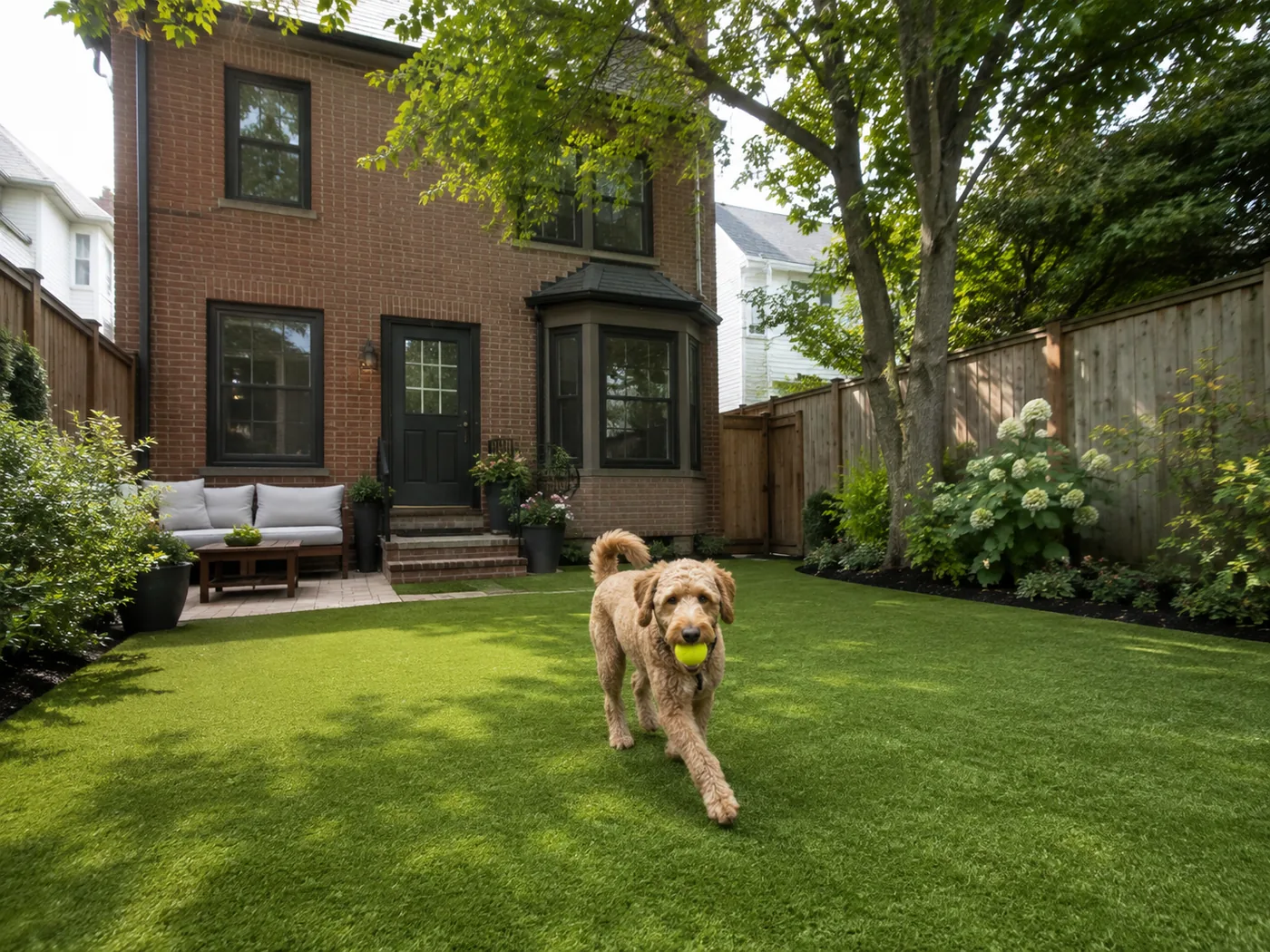
Three separate mechanisms. Urine nitrogen burns grass in concentrated spots. Repeated running along the same route compacts soil until roots cannot survive. And digging removes the plant outright. No seed blend survives all three.
Three things differ from a standard lawn build, and all three matter.
Standard turf backing has drainage holes at intervals. Pet backing drains across its entire surface at several times the rate. Urine needs to go straight down, not travel sideways looking for a hole.
The single biggest factor in whether a pet area smells. Plain silica sand holds ammonia. Coated antimicrobial sand and zeolite capture and neutralise it. Infill options compared.
Pet areas benefit from a more open aggregate that moves liquid down and out fast. On Lexington clay this often means a drainage layer underneath as well.
Less than people expect:
Not when specified and built correctly. Odour comes from ammonia held in the wrong infill or a base that does not drain. Both are decisions made before installation, and neither is fixable afterwards without pulling the turf. This is why pet areas are the wrong place to accept the cheapest quote.
Most dogs stop within days. Turf is anchored at every edge with nothing loose to grip. Persistent diggers occasionally work at a seam or perimeter, which is why anchoring quality matters more on pet installations than anywhere else. If your dog is a determined digger, say so at the estimate and we will over-specify the perimeter.
The turf we install is lead-free and pet infills are non-toxic. There is a real upside as well: no fertiliser, no pre-emergent herbicide, no grub treatment. Dogs on synthetic grass are not walking through lawn chemicals and then licking their paws.
Turf runs warmer than grass in full sun. Dogs self-regulate and move to shade, the same as on a driveway. For full-sun pet areas we recommend cooling-technology turf, and a rinse drops the temperature in seconds. More on turf and heat.
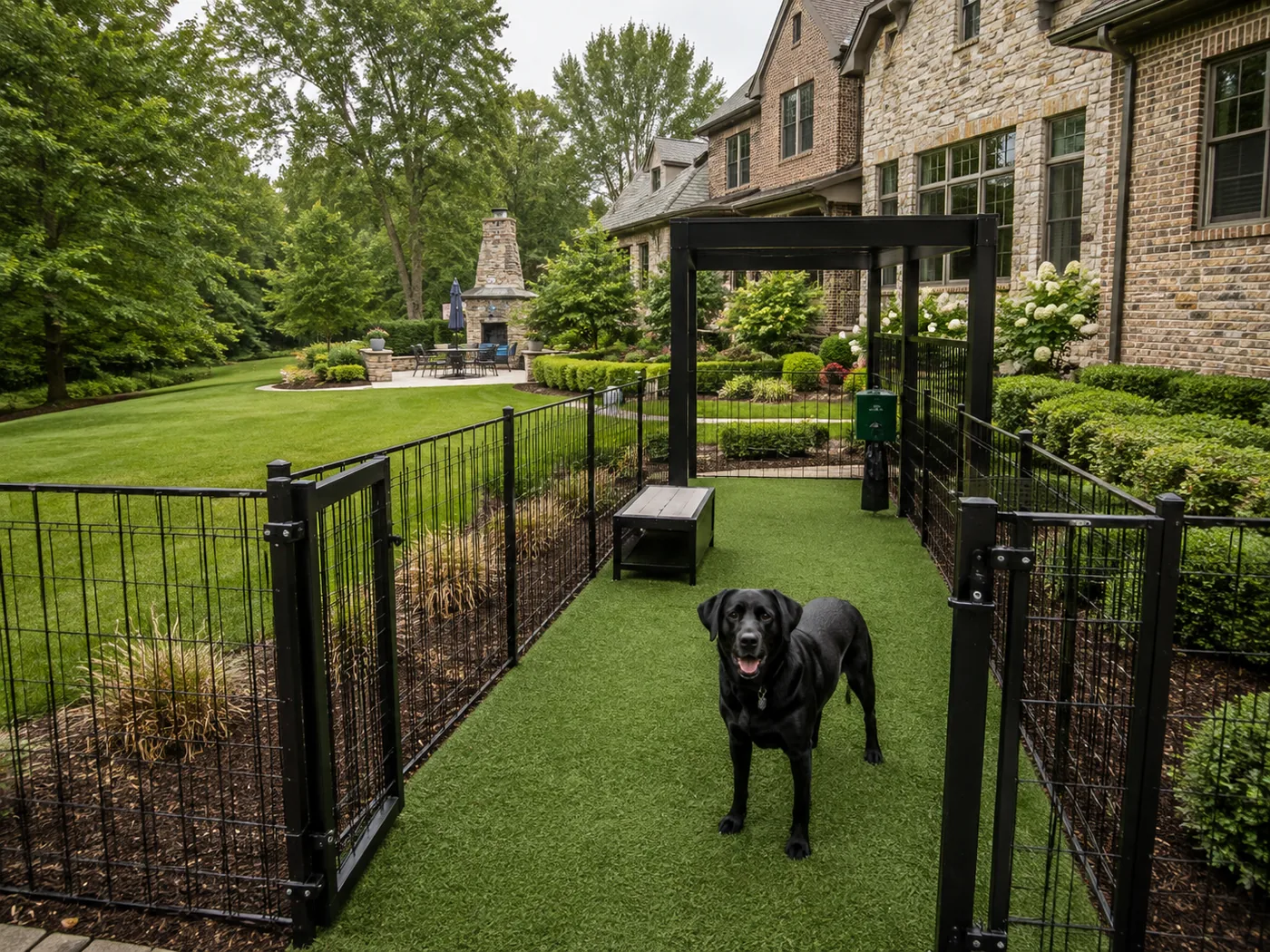
Most of our pet work is a dedicated run of 200 to 300 square feet rather than a full conversion. It solves the actual problem — the muddy strip, the worn path, the bare patch — at a fraction of full-yard cost, and the rest of the lawn stays as it is.
Most estimates are scheduled within 48 hours.
Tell us the space and we’ll give you a firm, written price. No pressure, no obligation.