Pet turf and dog runs in Lexington
No mud through the kitchen. No worn dirt track along the fence. No holes. Built specifically for dogs rather than sold as a lawn product.
No mud through the kitchen. No worn dirt track along the fence. No holes. Built specifically for dogs rather than sold as a lawn product.
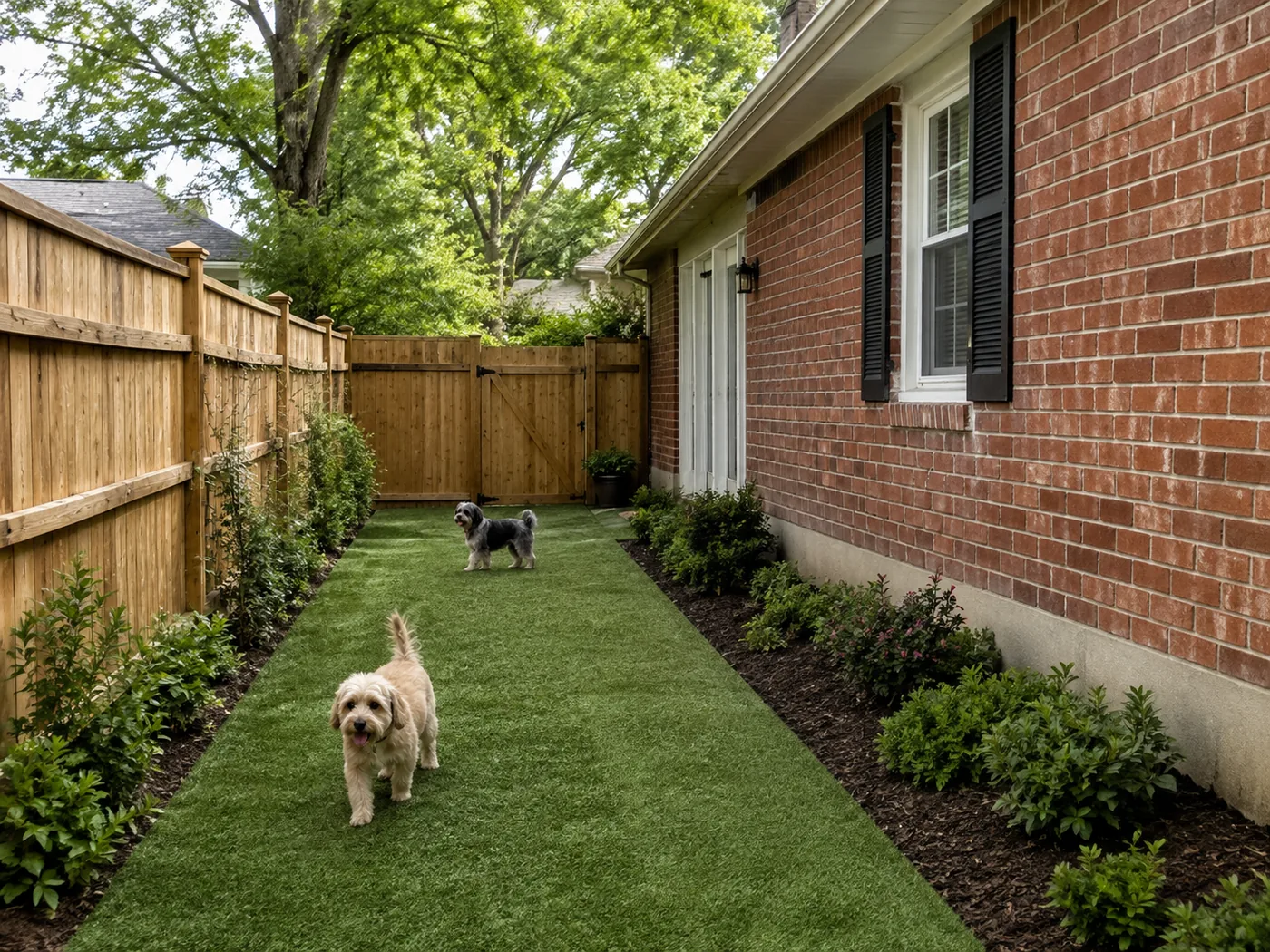
The strip of yard where your dog runs has been bare dirt for three years. It turns to mud every time it rains, the mud comes inside on four paws, and reseeding it in autumn buys you until roughly February.
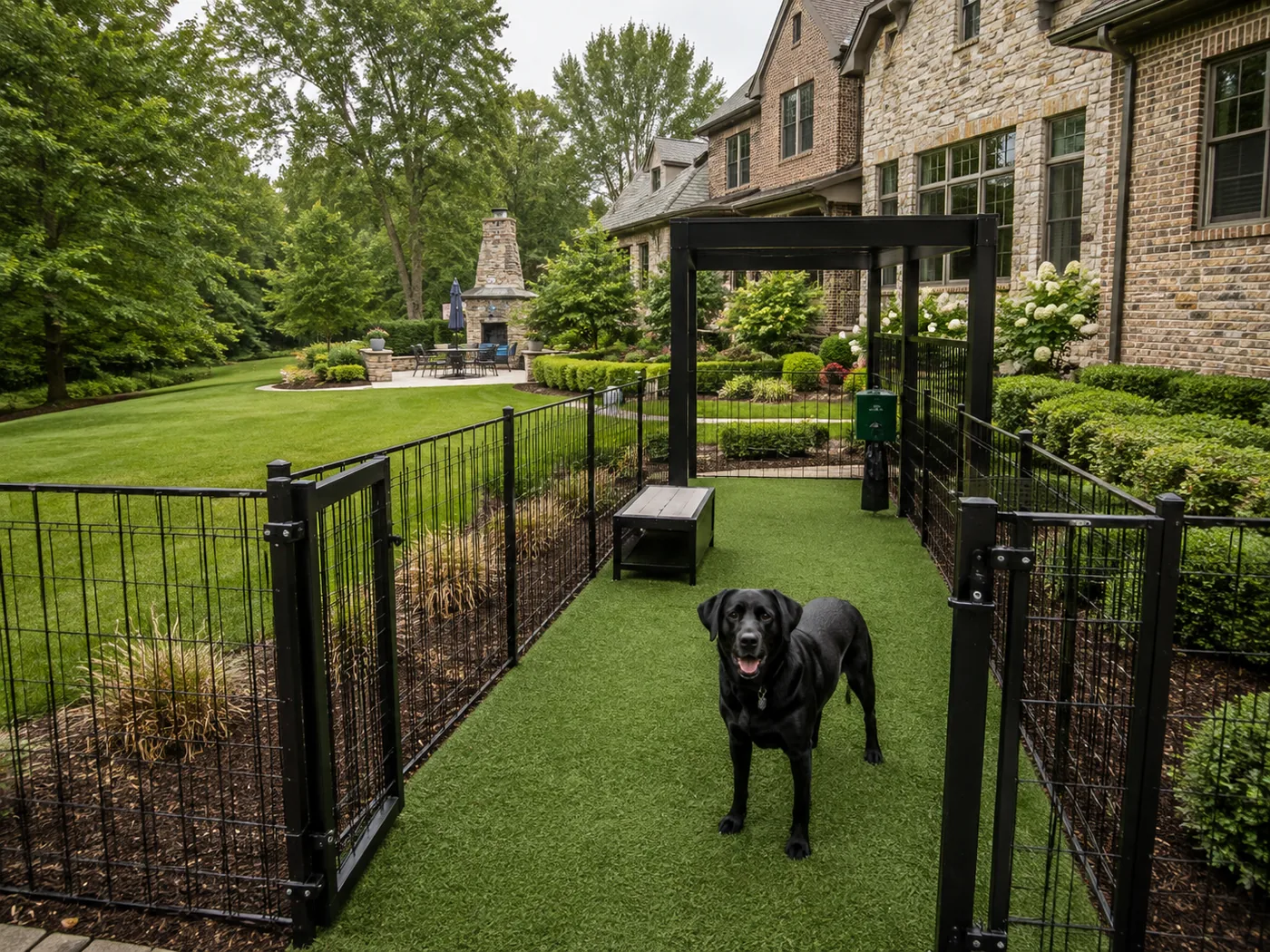
This is the most common reason people in Lexington call us, and it is the project where turf makes the most obvious sense. Dogs do not damage synthetic grass the way they destroy a natural lawn, and a pet installation is built differently from a standard one.
Selling ordinary lawn turf for a dog area is the most common mistake in this industry. A proper pet installation differs in three specific ways:
Standard turf uses hole-punched backing. Pet turf uses a fully permeable backing that drains across its entire surface, typically at several times the rate. Urine needs to move straight through rather than pooling and travelling sideways.
Silica sand works fine under a lawn. Under a dog it holds ammonia. We use an antimicrobial or zeolite-based infill that captures and neutralises ammonia rather than letting it accumulate. This is the single biggest factor in whether a pet area smells in August.
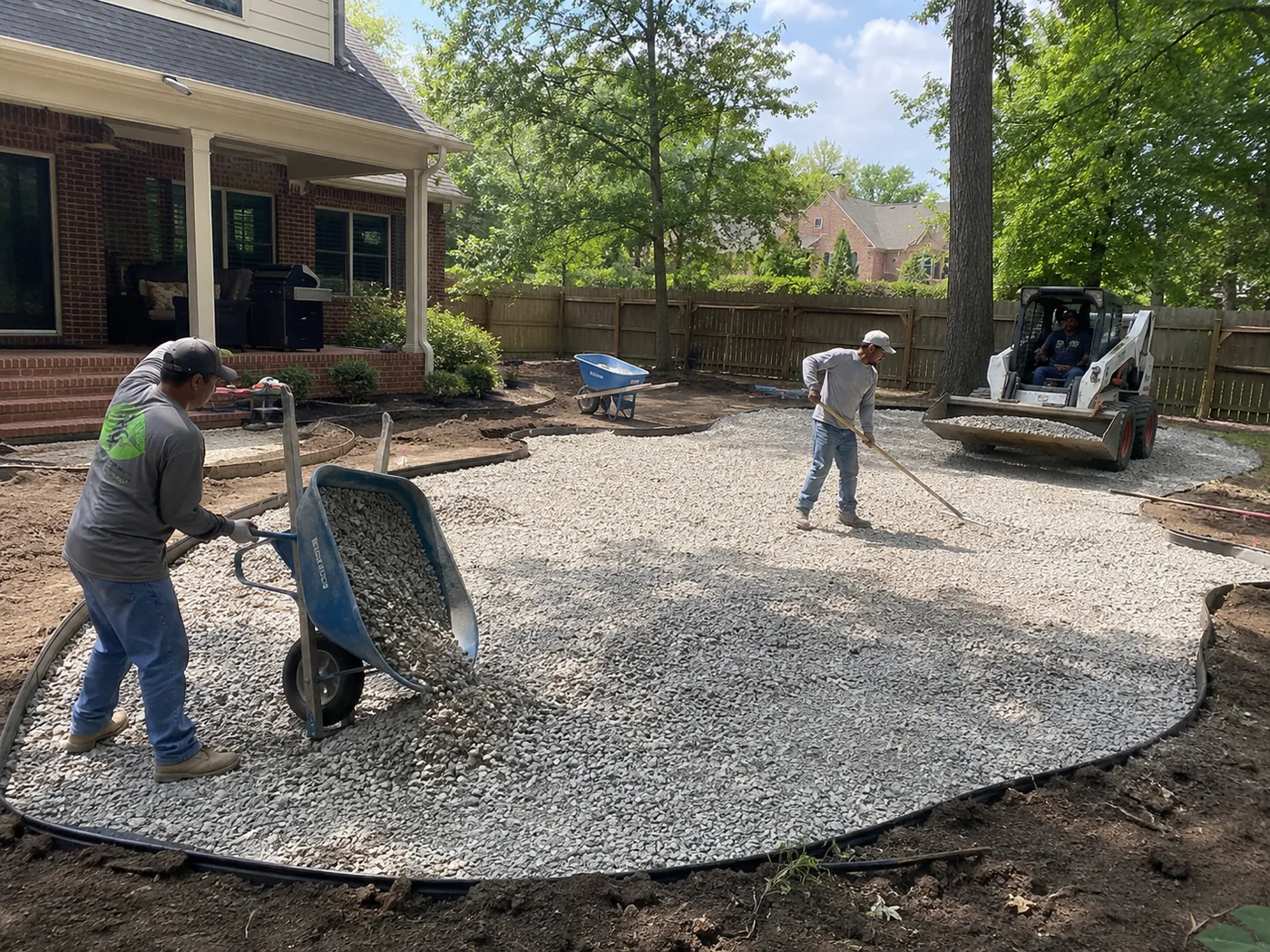
Pet areas benefit from a slightly more open aggregate base that moves liquid down and out fast. On heavy clay we often add a drainage layer beneath, because the clay itself will not take the volume.
Not when it is built correctly and rinsed occasionally. Odour comes from ammonia held in the infill or trapped by a base that does not drain. Get the backing, infill and base right and a pet area stays neutral. Get any of the three wrong and no amount of cleaning solves it afterwards.
Solid waste is picked up exactly as you do now. Everything else rinses through with a hose. A monthly rinse in warm weather is plenty for most households; a turf-safe enzymatic cleaner two or three times a year handles heavy use.
Very unlikely. Turf is anchored at every edge and there is nothing loose to get a claw under, so most dogs stop trying within days. Determined diggers occasionally test seams, which is why perimeter anchoring and seam quality matter on pet installations specifically.
Yes. The turf we install is lead-free, and pet-specific infills are non-toxic. There is a real safety upside too: no fertiliser, no pre-emergent herbicide, no grub treatment. Dogs on synthetic grass are not walking through lawn chemicals.
We install commercial pet surfaces as well as residential. Facility work has different requirements — higher traffic density, sanitation protocols, and usually a drainage system engineered for hosing down daily. Call and we will walk through the specification.
A dedicated dog run of around 200 square feet typically runs $1,600 to $3,200 installed. Pet-specific backing and infill add modestly per square foot over a standard lawn build, and it is not a place to economise. See full pricing.
Most estimates are scheduled within 48 hours.
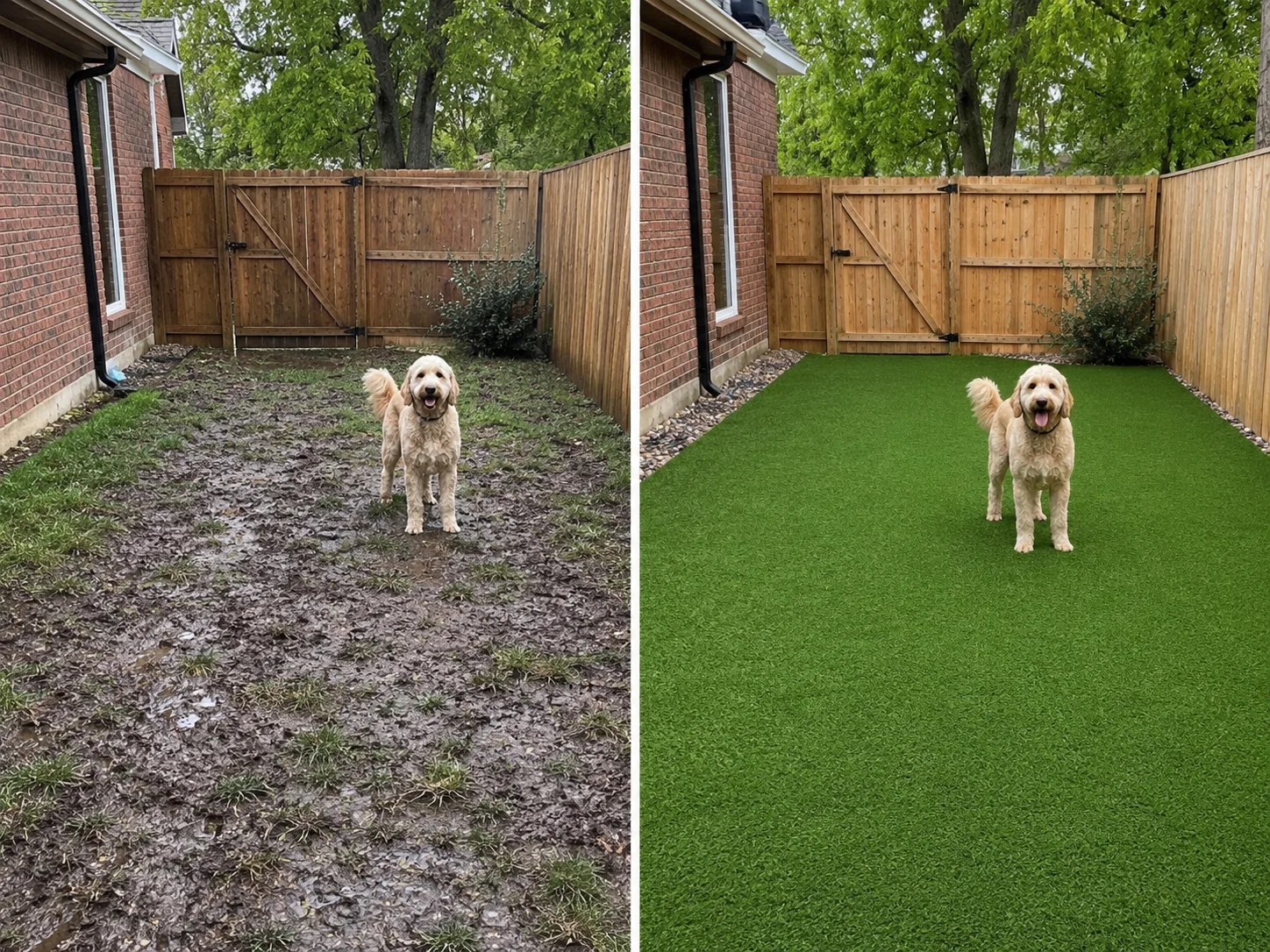
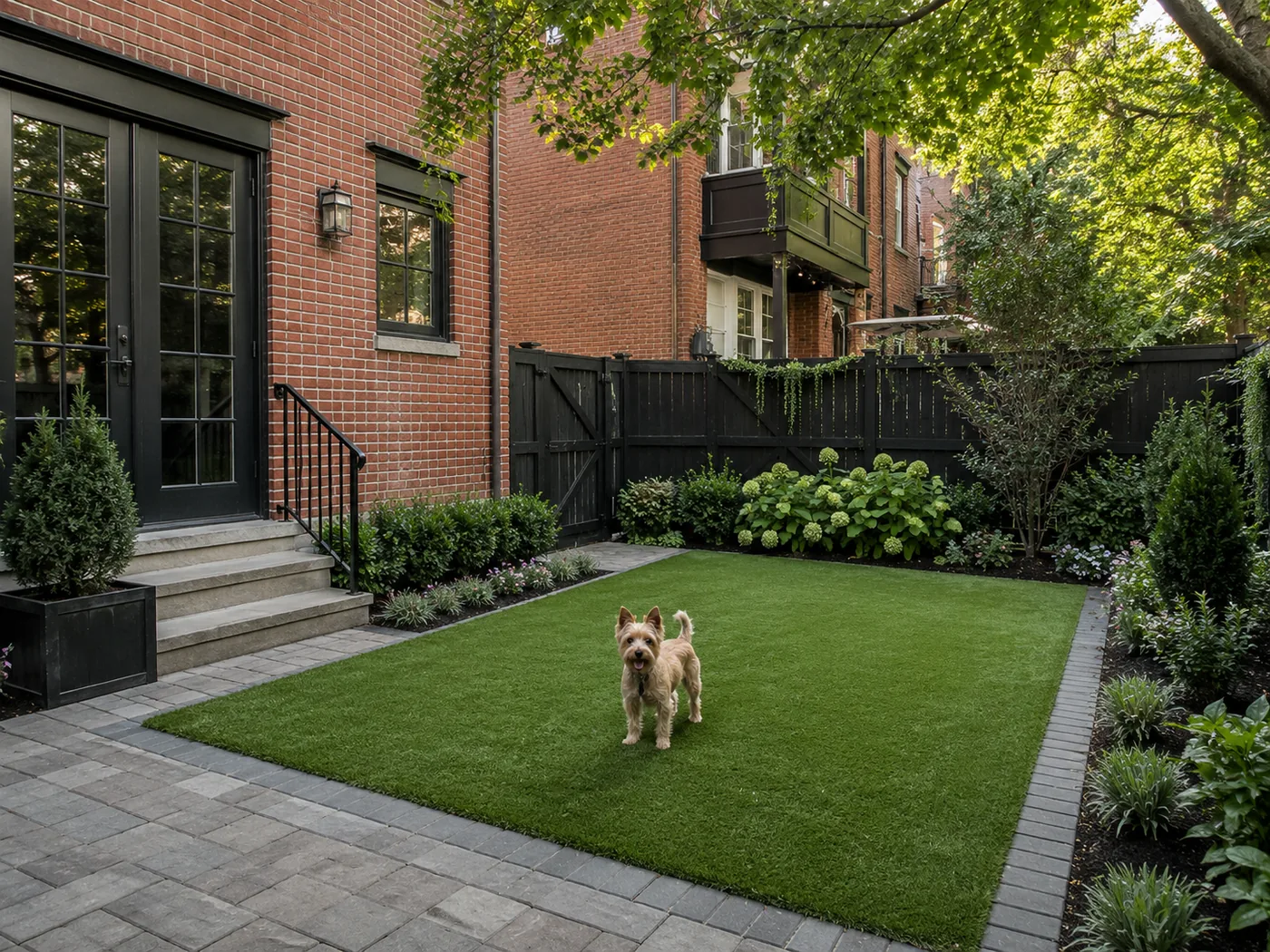
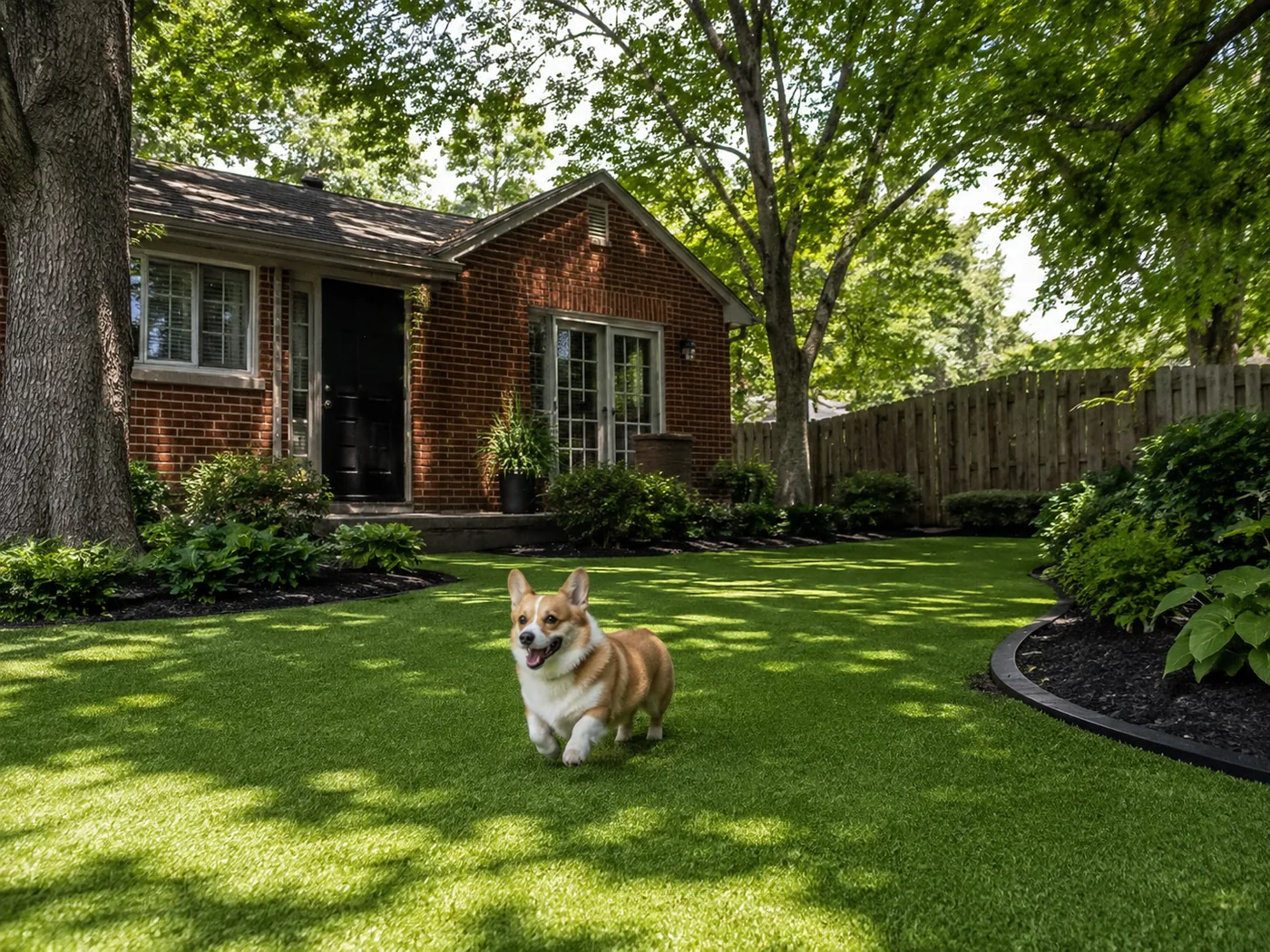
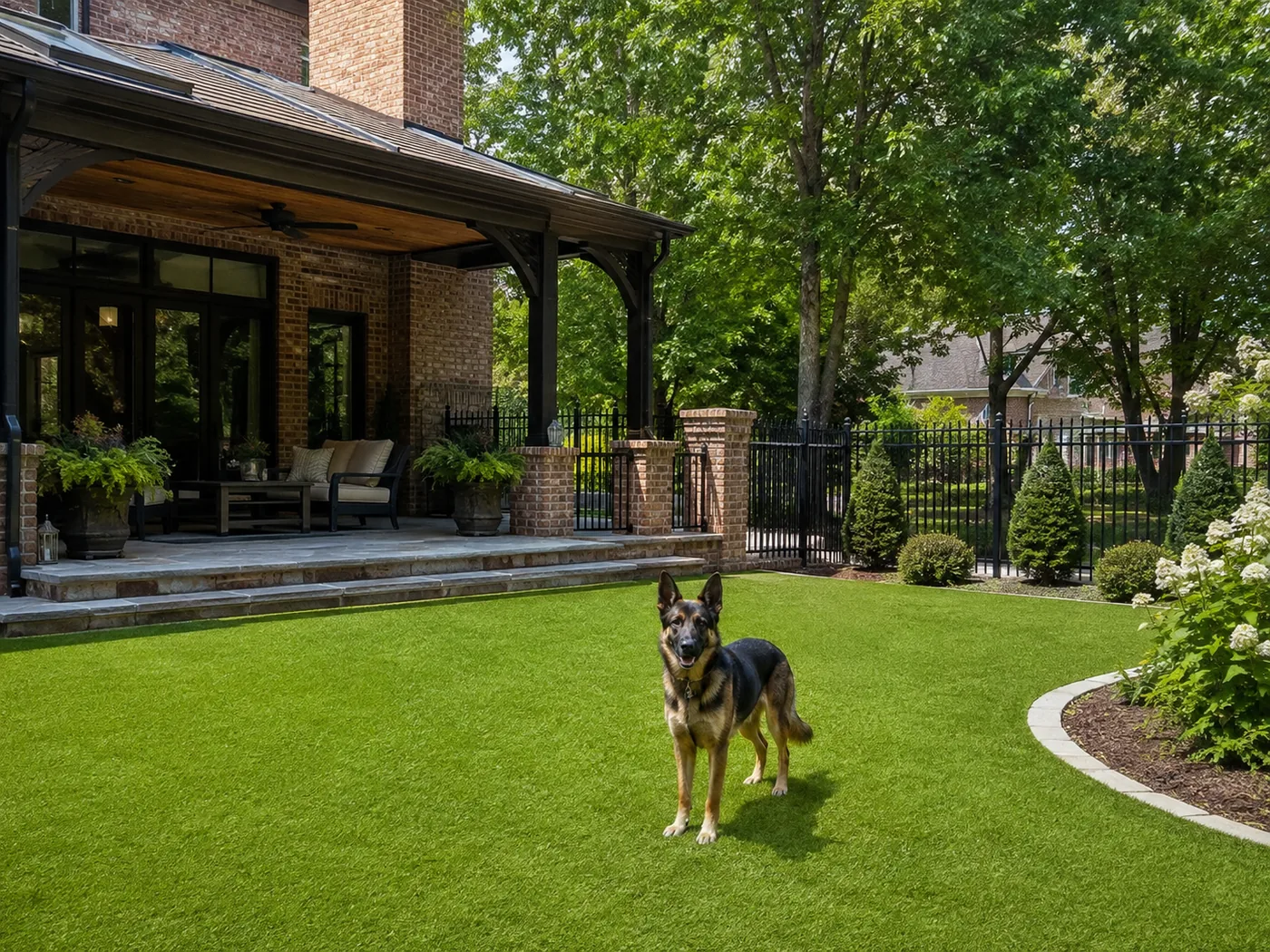
Images are representative of the work we do.
Tell us the space and we’ll give you a firm, written price. No pressure, no obligation.